
Clinical Director

Hey there, I’m lance :]
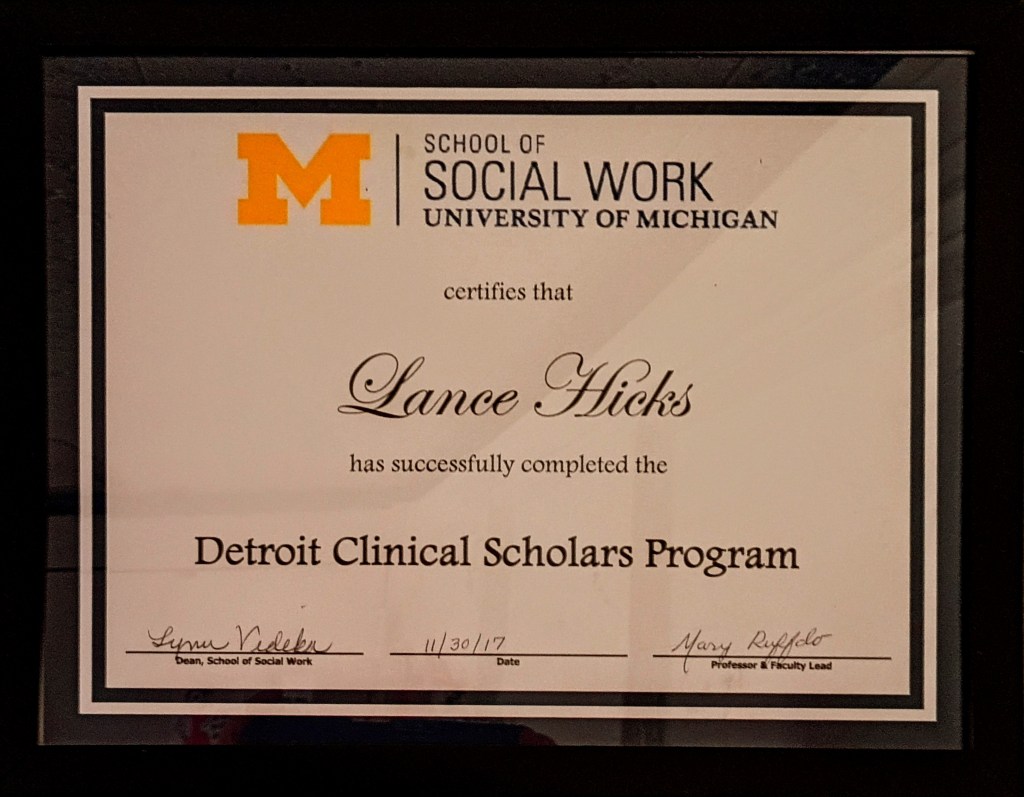
I’m a light-skinned/mixed trans femme, and an organizer from the East side of Detroit. I’m also a trauma therapist who lives with my own survivor history. I have a Bachelor of Social Work degree from Wayne State University, and a Master of Social Work from the University of Michigan.
Before I was a therapist, I was an outreach worker, a peer mentor, a crisis center advocate, and a resource center specialist. I prefer social work to other therapy practices because it has the most space to offer holistic care, making us more accessible providers for folks who otherwise might not get care.
I often work with clients who have limited resources, severe symptoms, and long-term barriers to safety and support. While a lot of what I do involves traditional therapy, I’m comfortable offering services in the community or at client homes, and often lean into care coordination and adjunct case management (help with housing, income, healthcare access, or other practical needs) as a part of how I serve.
I work with a combination of somatic, psychodynamic, IFS / “parts” therapies, and expressive approaches, and I especially love supporting clients that haven’t had good care from providers in the past. I view my work as a way to support (in some small way) my Beloved Community’s healing and liberatory process. I work daily to be accountable to this role, and to human beings I support in this context.

As Clinical Director of Inner Justice Works Detroit, my role is accountable to all direct client service delivery, and collaboratively to the organization as a whole.
I hold this stewardship from a place of both lived experience of psychiatric survivorship, and a deep commitment to (my very particular, imperfect) intersectional abolitionist praxis.
Most of my daily work involves direct care for clients; but I very much enjoy supervising and consulting with other social workers and therapists, and connecting with clinical colleagues and organizing co-conspirators via intentional partnerships, as a part of my role at our practice.
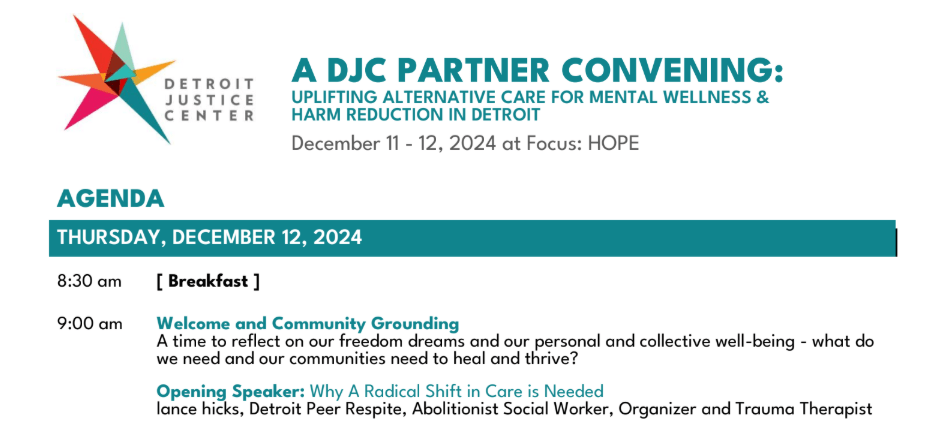
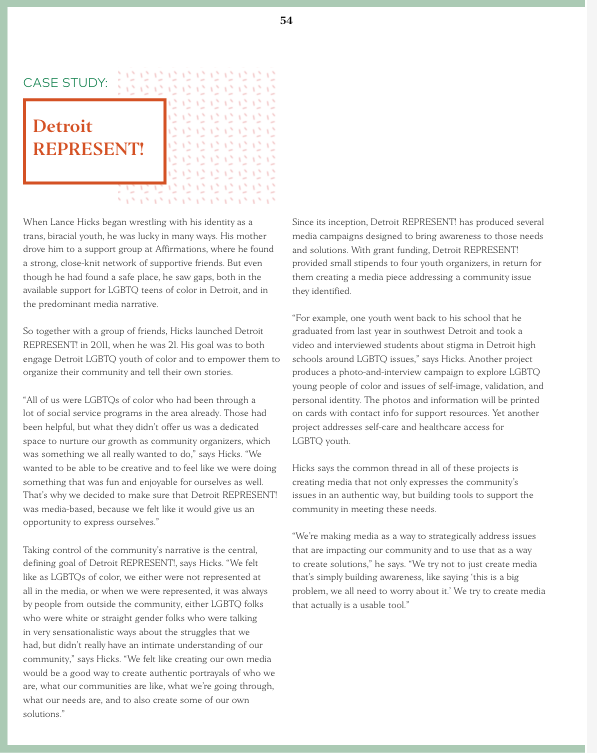
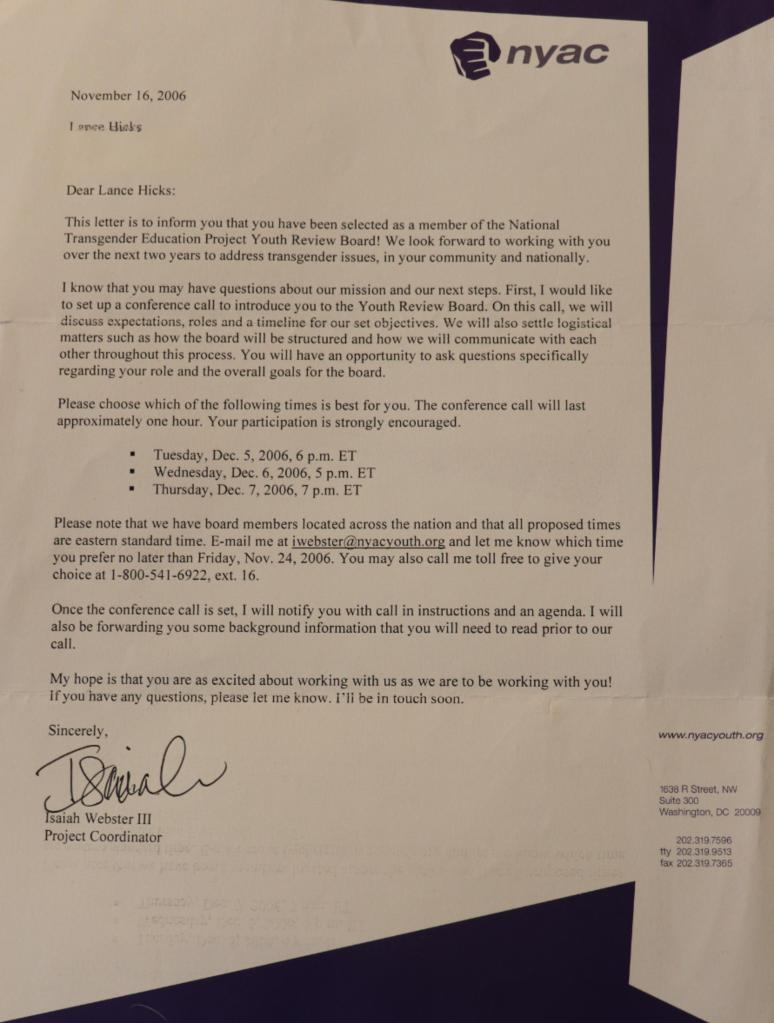
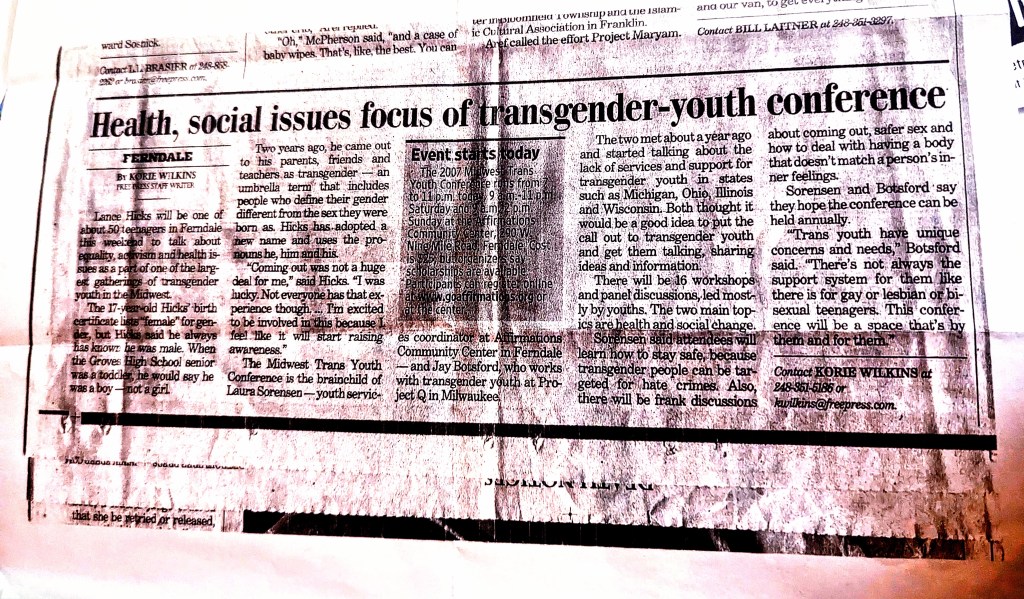
Beginning in high school, I’ve trained MSW students at the University of Michigan, Counseling students at Wayne State University and the University of Windsor, undergraduate students at Cornell University, and middle and high school students across Southeast Michigan on the topics of Sexual Orientation Gender Identity and Expression (SOGIE) 101, anti-oppression in trauma work, and the basics of trans experience (Trans 101) and cissexism. I have additionally provided training on abolitionist interventions in mental health crisis, and community-led approaches to trauma healing, with with such local groups as Healing By Choice and Detroit Safety Team. I have additionally facilitated hours of original workshop content at the Allied Media Conference, Philadelphia Trans Wellness / Health Conference, Creating Change, and more. In the past, I have served as a contractual facilitator with The Fireweed Collective (Formerly The Icarus Project), and I was the first ever (unpaid, volunteer) training coordinator for volunteers on the Trans Lifeline. In past paid roles, I have been charged with development and supporting teams of youth peer educators who developed and led their own community workshops. My approach to training and consultation is collaborative and based in anti-oppression theory. In particular, I have valued much of what I’ve learned from the work of The Aorta Collective related to this praxis.
My formal clinical training includes…
- Five years of individual monthly consultation in Sensorimotor Psychotherapy (2021-Present)
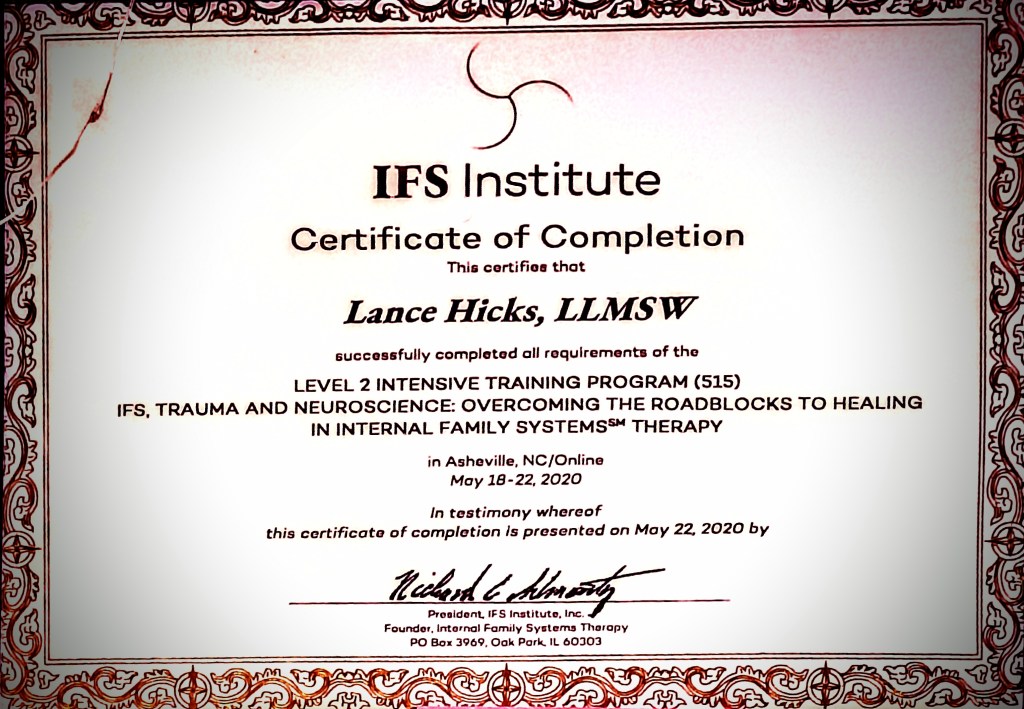
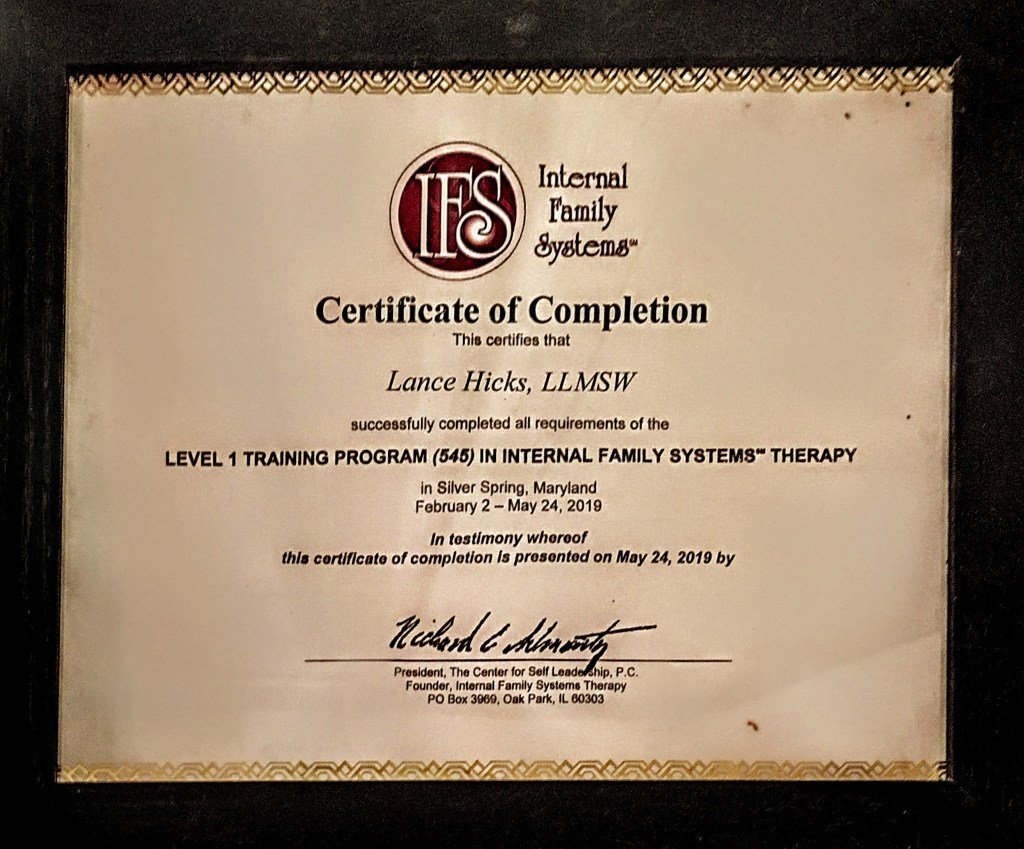
- Training through to certification-level by the Internal Family Systems (IFS) Institute (2022)
- Trauma and Neuroscience (2020)
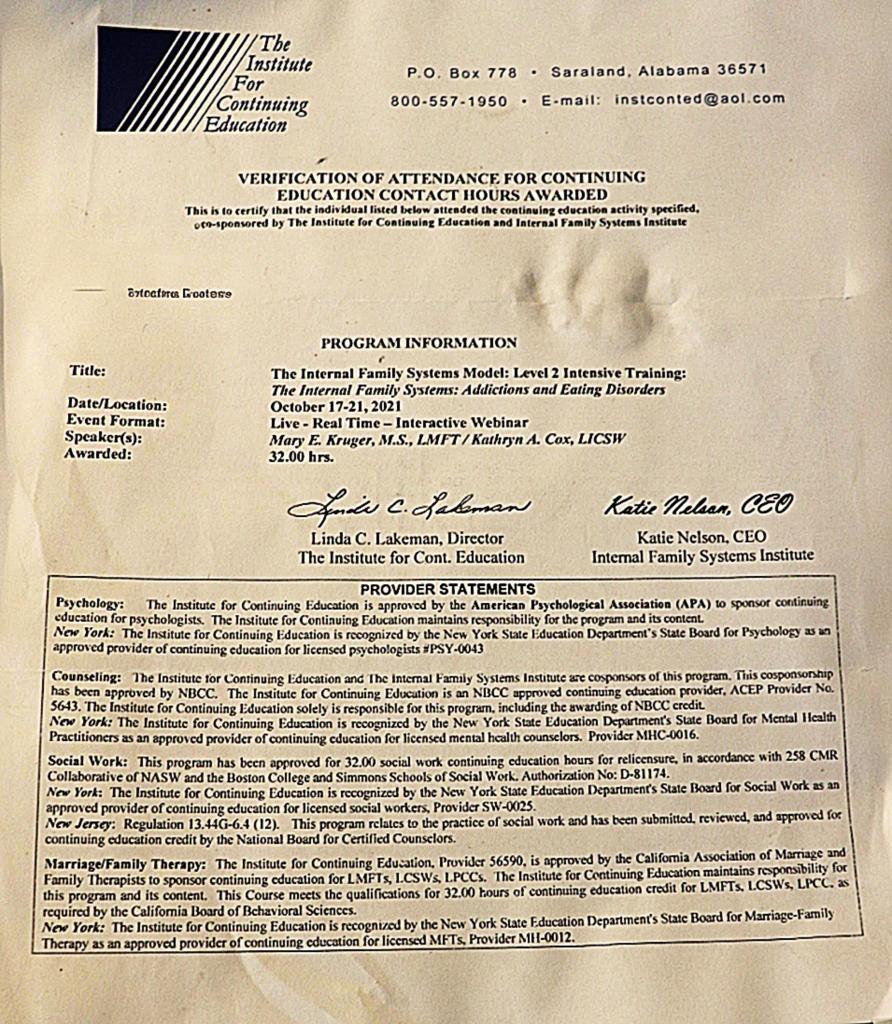
- Addictions and Eating Disorders (2021)
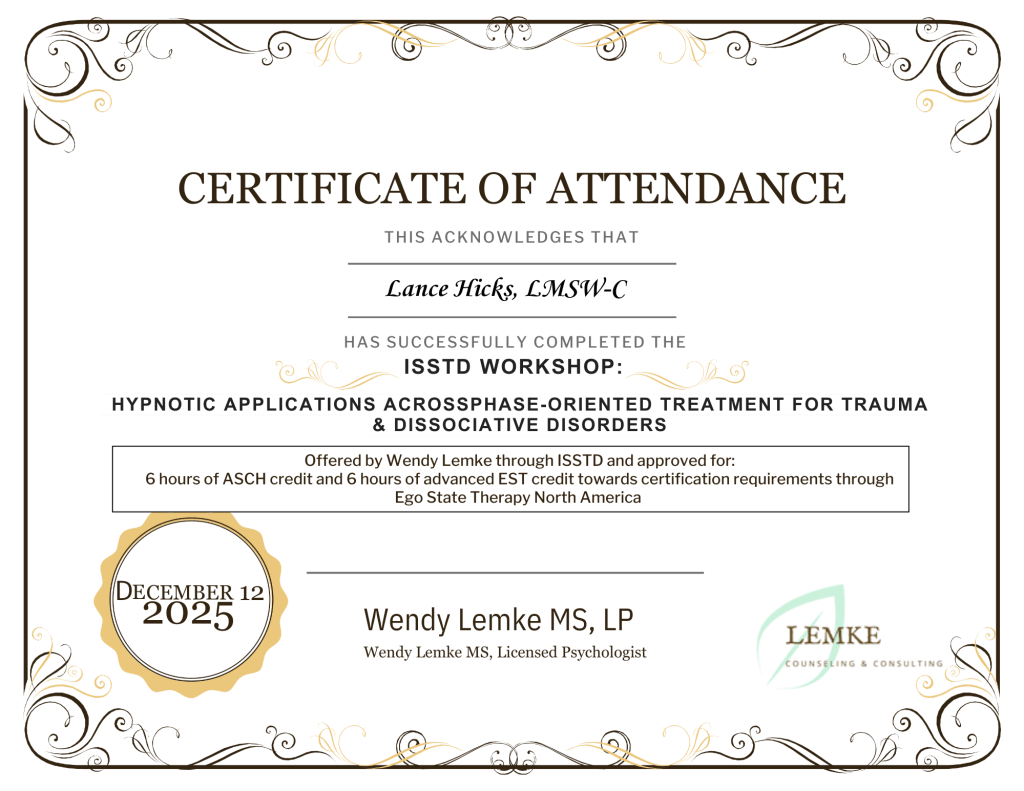
- International Society for the Study of Trauma and Dissociation (ISST-D) Professional Training Program, Level 1 – The Complexities of Complex Trauma (2022)
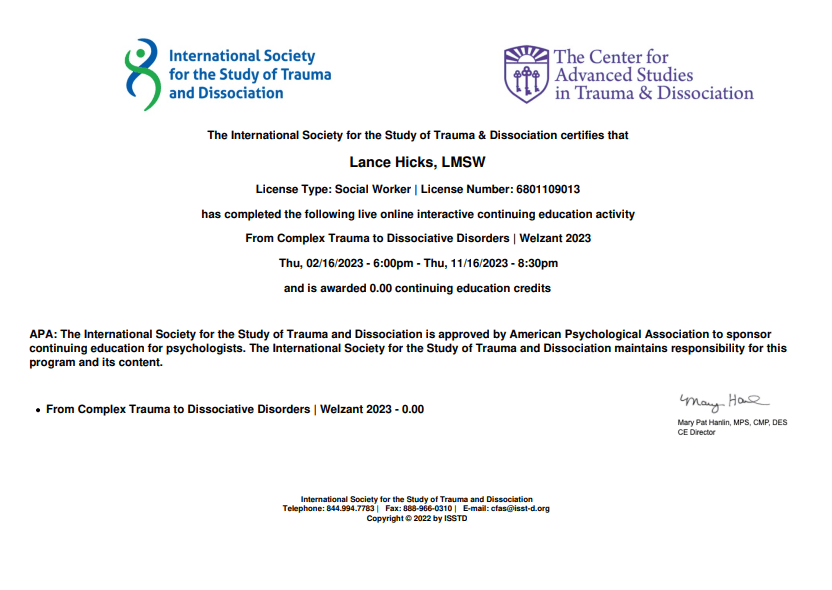
- International Society for the Study of Trauma and Dissociation (ISST-D) Professional Training Program, Level 2 – From Complex Trauma to Dissociative Disorders (2023)
- Sensorimotor Psychotherapy Institute – Level 1 (2023)
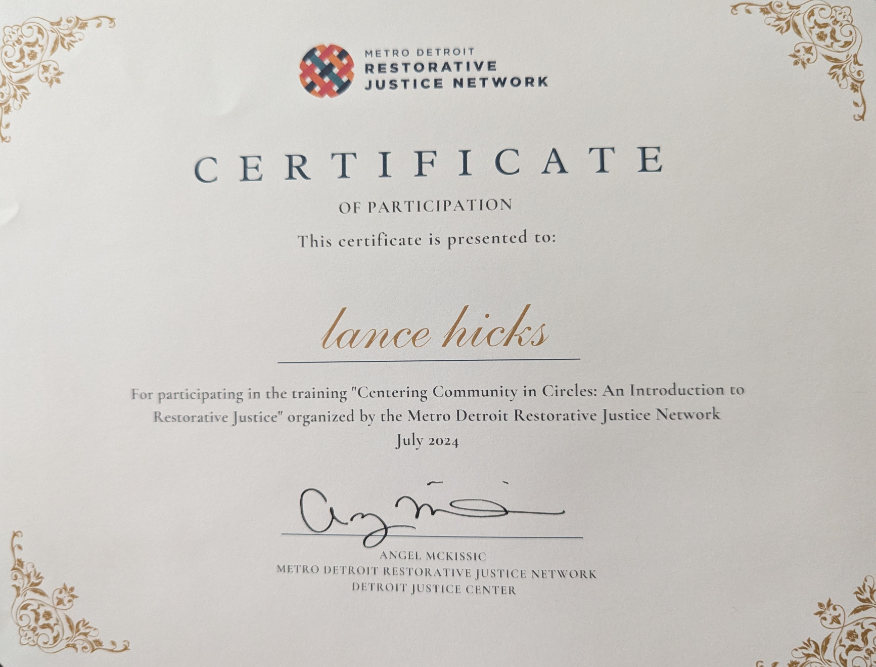
- Metro Detroit Restorative Justice Network – Circle Keepers Training (2024)
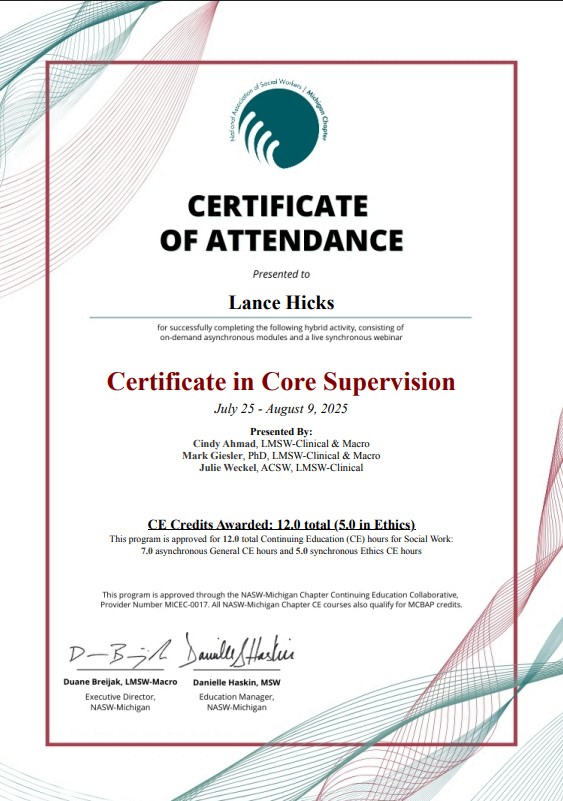
- NASW – Michigan Certificate in Core Supervision (2025)
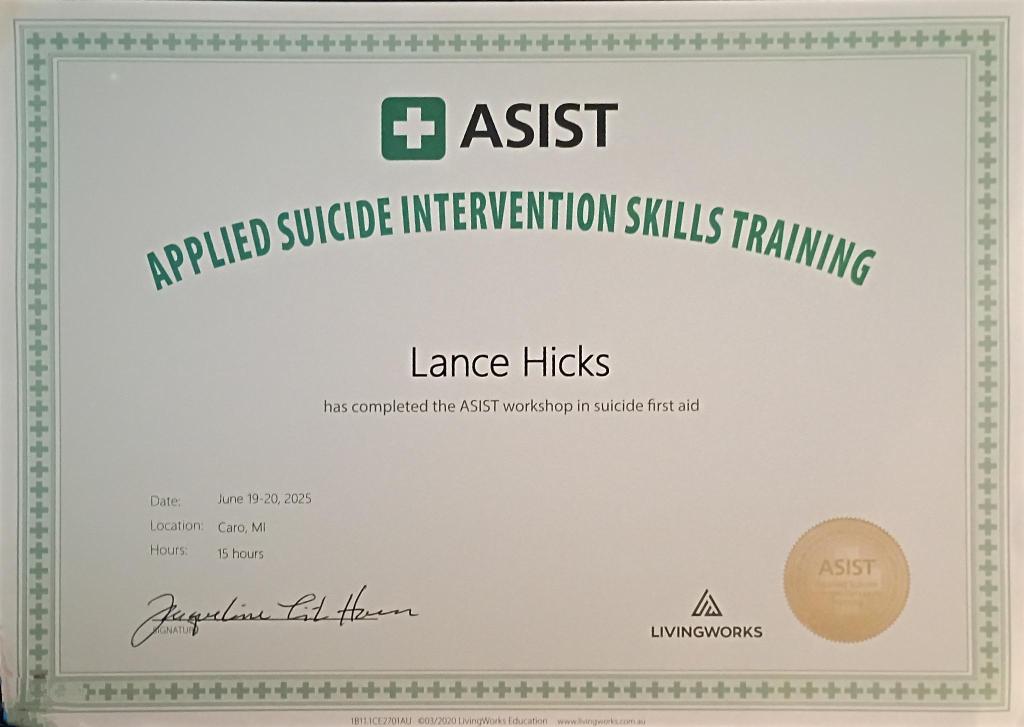
- Applied Suicide Intervention Skills Training (ASIST) (2025)
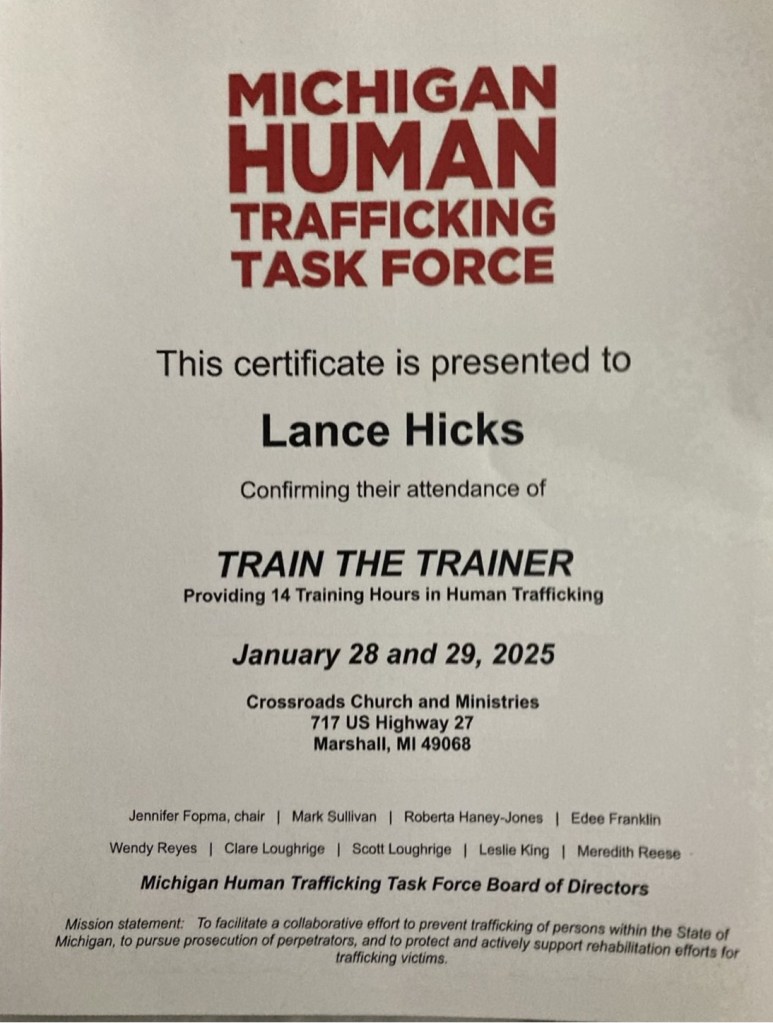
- Michigan Human Trafficking Taskforce – Training of Trainers (2025)

Trauma-Focused Psychotherapy
As a therapist, I’m pretty eclectic, but my foundations are solidly psychodynamic. If you’re not a therapy nerd, that just means that I use the relationship that I build with you as the client to help us both learn about (or gain “insight”) into what’s causing the problems in your outside life and relationships. I work by getting to know you, letting you get to know me, and seeing what unfolds in our relationship over time. I don’t have an “agenda” or set script for sessions most of the time, and prefer to let my clients lead, but I can make suggestions if you’re feeling stuck.
I’m a pretty specialized trauma therapist, and don’t normally work with clients where trauma isn’t a primary issue; however, I have made exceptions for clients that have had a difficult time accessing quality care. I work best with teens and adults of all ages; however, I have supported a few younger kids with trauma work, when there was alignment.
Although I’m trained in IFS, I rarely practice the model to fidelity at this time. For the most part, I integrate eclectic parts modalities (including IFS, ego states, and others) alongside expressive arts therapies, bibliotherapy, and sensorimotor psychotherapy.
While I do sometimes support clients in crisis with concrete skill-building, emotion management, and coping or grounding practices, my emphasis is about providing a space for you to explore and better understand yourself and your experiences, opening opportunities to shift relationships with both yourself and others in the process. To me, this is the difference between “symptom management” and “clinical treatment,” where lasting change happens.
Clinical Consultation and Supervision
In my role, I supervise both MSW Student Clinicians at the University of Michigan School of Social Work, and also LLMSW Clinicians working towards full licensure. I am not able to accept unsolicited requests for either student or LLMSW supervision at this time; however, I am available for brief / targeted clinical consultation.
I understand my supervisory style to be psychodynamic, as well as therapeutic. By building a human relationship with supervisees, and supporting their developing insight alongside professional identity and concrete clinical skills, I ensure a strong connection that has room for both dyadic safety alongside honest feedback and structured critique. I believe that rigor and compassion depend upon one another, so I expect a lot from folks I supervise, and also model solution-focused, compassionate adaptive responses when the best-laid plans fall flat.
In my supervisory role, I aim to…
- support supervisees’ understanding of the NASW Code of Ethics, and oversee hands-on skill-building in accordance with the Council on Social Work Education’s Nine Competencies
- Facilitate cultivation of the supervisee’s personal praxis around navigating the social work profession within the context of their personal values, identities, and context
- Offer and refer to structured supplemental training and networking opportunities, and proactively support supervisees’ professional development
As a clinical consultant, I have a clinically supportive relationship with a fully-licensed clinician who may be in need of targeted support, or with a limited-licensed clinician who is supervised by another primary supervisor, but in need of targeted guidance in working with a challenging clinical problem.
Some of the primary areas in which I offer consultation include…
- Complex trauma / C-PTSD and dissociative disorders (DID, OSDD)
- Complex attachment and family problems
- Assessments, informed consent, and letter-writing for gender-affirming care
- Engagement and care for clients being (or suspected of being) actively abused, or with limited safety / reduced access to critical resources
- Applications of Abolitionist clinical social work that aligns with the NASW Code of Ethics and facilitates optimal client outcomes
My sliding scale for supervision and consultation ranges from $50 / hour to $100 / hour; however, I never turn away providers who work with under-resourced clients, so if that scale is out of reach, let me know what could be accessible for you, when you reach out to schedule a time to talk 🙂
 Inner Justice Works