
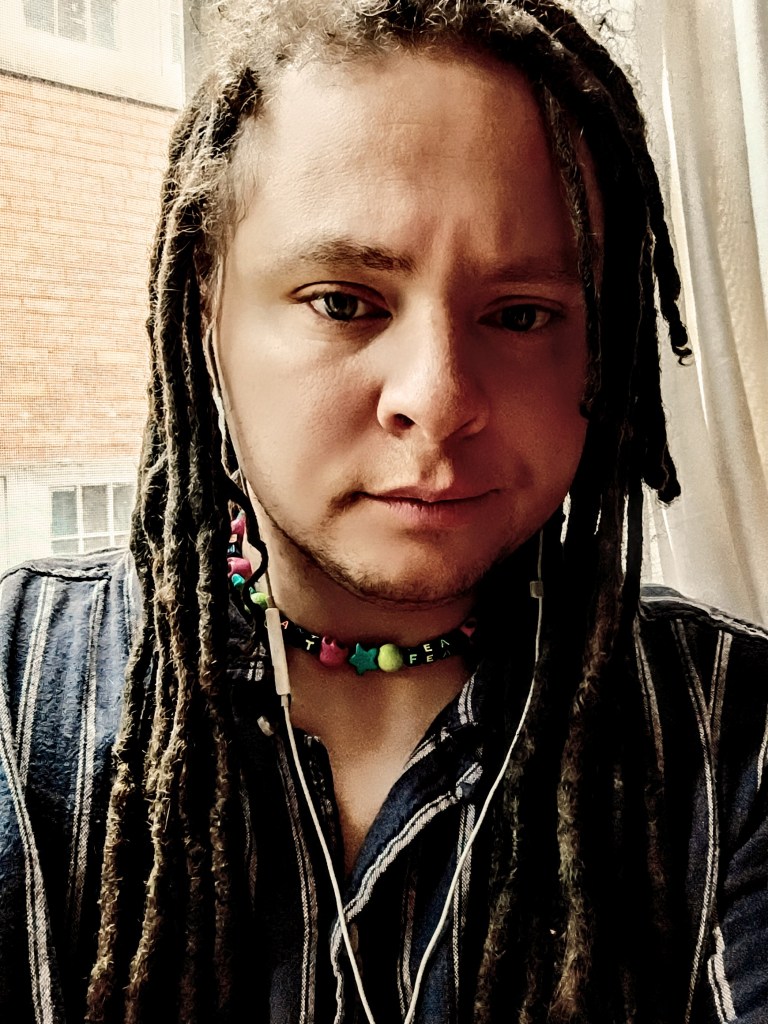
I began providing emotional support and crisis care as a teenager, through a county-funded youth peer support program. Since then, I have always been involved in peer-to-peer supports, community organizing efforts, and mutual aid work. Since 2005, I have developed and facilitated support groups for trans youth, supervised drop-in programs for unhoused adolescents, offered HIV prevention and advocacy services to queer and trans young people and sex workers, staffed shelters for runaway and homeless teens, provided companionship and basic living supports for d/Disabled adults, led therapeutic groups for teens in residential psychiatric care, and served as a case manager for sex workers and survivors of sex trafficking.
I have organized alongside queer and trans young people to use media strategies to address issues that ranged from street harassment to intimate partner violence to gender essentialism. I was an early volunteer with Detroit Safety Team, offering peer-to-peer, decarcerated crisis support at local organizing spaces and events across the city. I held space as Lead Advocate at Camp Trans in 2008 and 2009 (meaning I provided and coordinated emotional supports to trans organizers and cis accomplices fighting for trans women’s inclusion in women’s spaces). I worked as part of national delegations that drafted curricula to educate social workers, doctors, and other healthcare providers on how to care for trans young people, when I was 17 years old. I conducted street outreach that provided safe(r) sex materials, sandwiches, bleach kits, and immediate, on-the-spot crisis support to street-level contact sex workers across the City of Detroit. As a part of that program, I also trained and supported peer outreach workers with their own lived experience. I worked alongside high school student organizers across the state, who had been victimized by zero tolerance policies and harsh disciplinary practices rooted in anti-Blackness, to pass the Rethink Discipline legislation that confronted zero tolerance policies disproportionately affecting d/Disabled, queer and trans, poor and working class, Black and Brown K-12 students in Michigan. In its formative days, I was the inaugural training developer and coordinator for trans-identified peer crisis workers providing decarcerated crisis care via the Trans Lifeline.
Before I ever had any formal clinical training, these were my qualifications. I share that, because it is important for me to acknowledge that my best teachers have not been licensed clinicians, but community elders, harm reduction and outreach mentors, and fellow queer and trans young people struggling to survive.
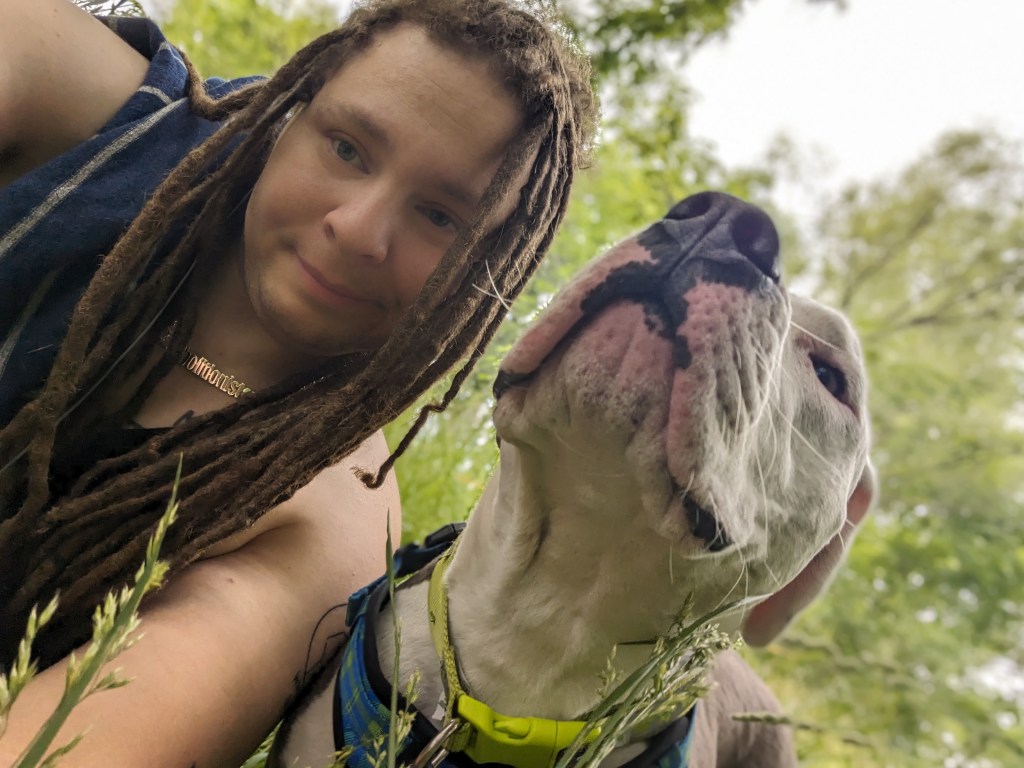
I earned my Bachelor of Social Work (BSW) degree from Wayne State University in 2016, and my Master of Social Work (MSW) degree from the University of Michigan in 2017, where I was a Detroit Clinical Scholar — meaning my graduate training emphasized mental healthcare in the context of a medical setting, and the provision of services to marginalized, low-income children and young people. That program still exists, though now under a different name. Most of my clinical training in school included Cognitive Behavioral Therapy, Dialectical Behavioral Therapy, Motivational Interviewing, and screening, assessment, crisis support, care navigation, and systems advocacy skills.
Because I knew it would be helpful for me, as a trauma clinician, to receive training in body-based, “bottom-up” and “depth” psychotherapy approaches, and because I was not trained to provide these in graduate school, I chose to complete advanced training in Internal Family Systems (IFS) from the IFS Institute, and Sensorimotor Psychotherapy (SP), from the Sensorimotor Psychotherapy Institute, and I draw most frequently from these approaches in my daily work. I also tend to integrate elements of Ego States and Time-Limited Dynamic Psychotherapy (and other psychodynamic approaches). Over the past couple years, I’ve begun to work with expressive arts therapies (including leading therapeutic art groups), bibliotherapy, and play therapy (with kids and adults); however, I am not formally trained in these approaches, and am only able to draw from them in the context of eclectic treatment approaches. I also realize much emotional distress is related to real-life, tangible problems related to scarcity, unsafety, invalidation, isolation, oppression, inequity, sickness, d/Disability, and other problems that aren’t “in your head,” so to that end, I often support folks with accessing tangible resources, understanding their legal rights, seeking quality medical care (including gender-affirming care, psychiatry, and treatment of chronic pain and conditions of long duration) through care advocacy and resource navigation.
As a gender specialist, I am familiar with the World Professional Association of Transgender Health (WPATH) Standards of Care, and am qualified to provide you with pro-bono assessments and letters for gender-affirming healthcare (I offer this as a free service to the community, and also promote this service through the Gender-Affirming Letter Access Project); however, I do not hold WPATH membership due to my concerns about the association’s ongoing legacy of harm to trans people and communities. I am a member of the National Association of Social Workers, and of the International Society for the Study of Trauma and Dissociation (ISST-D). In 2022, I completed the first level of ISST-D’s Professional Training Program, The Complexities of Complex Trauma, and in 2023 I completed their workshop: From Complex Trauma to Dissociative Disorders.
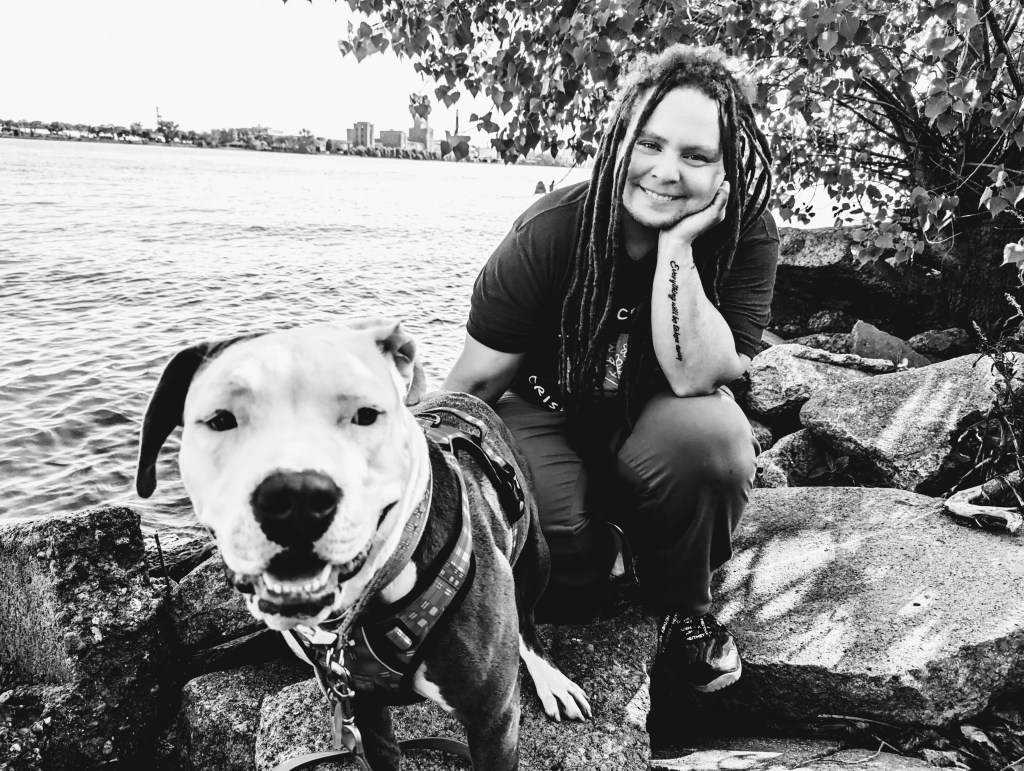
I am a harm reductionist at heart, and my roots are in community-based outreach. When it’s clinically appropriate, I am happy to provide supports and services in nontraditional settings, at nontraditional times. I have provided therapy in community mental health clinics, low-barrier medical clinics, public bathrooms, parked cars, wildflower fields, public libraries, juvenile detention centers, and (of course) on Zoom.
Modalities: Psychodynamic, Sensorimotor Psychotherapy (somatic), Internal Family Systems (IFS), attachment-focused, Motivational Interviewing, Bibliotherapy, Walk-and-Talk therapy, expressive arts, integrative.
Areas of intentional growth for me in 2025/2026 include…
- skills for supporting neurodivergent / neuro-expansive folks (especially folks working with compulsions, avolition, OCD, sensory processing concerns and Autism or adjacent experiences, body-focused repetitive behaviors, and “tics”)
- work with children under age 12 and adults over age 60
- integrative, community-based, team-based care for client victims of ongoing abuse, medically complex clients, returning neighbors (formerly incarcerated clients), clients navigating addictions, and trans clients with limited social support
All of these areas are priorities for me, and I am relatively new to all of the above named work. Choosing to work with me on these issues means working with a less experienced practitioner likely to make mistakes; however, I am highly invested and committed to my own growth and learning, as well as to your outcomes. If you prefer to work on these issues with a more seasoned practitioner, I am happy to make referrals to the best of my ability, with consideration given to the number of available and qualified locally- licensed clinicians I’m able to identify.

Beyond formal clinical training, I am committed to prioritizing ongoing supervision and consultation, which I receive in the following ways:
I regularly offer and seek “peer consultation” from colleagues who specialize in the issues you’re navigating, especially when those issues are ones I have less experience with or training about.
I receive reflective clinical supervision, at various times, from a small group of seasoned clinicians with whom I have an ongoing mentorship/consultation relationship. In particular, I have an ongoing supervisory relationship with one certified Sensorimotor Psychotherapy Consultant-in-Training, one Internal Family Systems Approved Consultant, and one generalist trauma clinician with advanced understanding of specific types of assessments related to dissociative experiences. I do not have a formal, signed supervision contract with any of these practitioners, but have a strong rapport, working relationship with, and trust of all three. The role of consultation with these practitioners is to review my work, gain oversight, receive professional mentorship, and seek guidance to ensure I am always providing you the best support possible. As such, I will discuss your therapy material in consultation, exercising caution to preserve your confidentiality, and not consulting with practitioners known to you (unless per a formal agreement from you and signed release of information). That being said, it is common for me to discuss with these identified colleagues the need for specific resources, or even to request clinical guidance related to your care, when I believe it benefits our work together, while maintaining the privacy of your identity.
I integrate my lived experiences and community organizing wisdom into the work on a daily basis.
Therapists I have personally trained under, learned from, been supervised (and inspired) by, or who have mentored me (a non-exhaustive list):
- Dr. Kofi Adoma, Phd
- Rachel Crandall-Crocker, LMSW
- Daicia Price, LMSW
- Abigail Eiler, LMSW
- Danielle Flint, LMSW
- Chris Burris, LMHC
- Fatimah Finney, LMHC
- Tracy Wyman, LMSW
- Nancy Sowell, LCSW
- D. Michael Coy, LICSW
- Martha Sweezy, PhD
- Erik Orozco, LCSW
- Nic Wildes, LMHC
- David Córdova, PhD
- Sand Chang, PhD
- Erika Fox, LMSW
- Deran Young, LCSW
- Jill Hosey, RSW
- Will Randle, LCSW
- Antonia Caretto, PhD
- Michael Kristovic, LMSW
- Kekuni Minton, PhD
- Carissa Gaden, PhD
Clinical books that have shaped my practice:
- Attachment in Psychotherapy, by David Wallin
- Intensive Psychotherapy for Persistent Dissociative Processes: The Fear of Feeling Real, by Richard Chefetz
- The Protest Psychosis: How Schizophrenia Became a Black Disease, by Jonathan Metzl
- The Gift of Therapy, by Irivin Yalom
- My Grandmother’s Hands, by Resmaa Menakem
- The Last Time I Wore a Dress by Dylan Scholinski
- Treating Abused Adolescents by Eliana Gil
- Unmasking Autism – by Devon Price
- Hello Cruel World: 101 Alternatives to Suicide for Teens, Freaks, and Other Outlaws, by Kate Bornstein
- Looking Through the Eyes of Trauma and Dissociation: An illustrated guide for EMDR Therapists, by Sandra Paulsen
- Trauma and Memory, by Peter Levine
- Neurotribes by Steve Silberman
- Trauma and the Body: A Sensorimotor Approach to Psychotherapy, by Pat Ogden, Kekuni Minton, and Clare Pain
- Trauma and Recovery, by Judith Herman
- Treating Trauma-Related Dissociation: A Practical, Integrative Approach, by Kathy Steele, Suzette Boon, and Onno van der Hart
- Time-limited Dynamic Psychotherapy: A Guide To Clinical Practice, by Hanna Leavenson
Podcasts I’m Listening to, These Days…
- Therapy Chat
- Adventures in New America
- Terrible, Thanks for Asking
- Alice Isn’t Dead
- Madness Radio
- Authentically Detroit
- Bad with Money with Gabe Dunn
- Code Switch
- System Speak
- How to Survive the End of the World
- Very Bad Therapy
- LeVar Burton Reads
- Possibilities Podcast
- Riverwise Podcast
- Reply All
- Lore
- The Moth
- Michigan Liberation’s Respect the Roots Podcast
- Mad in America: Rethinking Mental Health
- Radiolab
- Fucking Cancelled
- Welcome to Night Vale
Interviews By People + Orgs That Have Taught, Trained, Consulted With, or Mentored Me Directly:
- Will Randle, LCSW – Dissociative Identity Disorder & Our Ever-Changing Understanding of Mental Health
- Jenny Lee and this podcaster talk about digital justice, inequality, media landscapes (or should we call them ecologies?), the relationship between offline and online community, narratives, and the myth of individualism.
- Chris Burris , LMHC- Creating Healing Circles: Using the Internal Family Systems Model in Facilitating Groups
- Fatimah Finney, LMHC – Intercultural Competence and IFS: A Conversation with Fatimah Finney
- Nancy Sowell, LICSW – Adult Health and IFS: a Talk with Nancy Sowell
- D. Michael Coy, LICSW – EMDR Therapy, Complex Trauma and Dissociation
- Daicia Price, LMSW – Mental Health in the Community
- Sand Chang, PhD – Disordered Eating & Gender Identity with Sand Chang, Psychologist & Co-Author of “A Clinician’s Guide to Gender-Affirming Care”
- Agustina Vidal & Rhiana Anthony – Destigmatizing Mental Health with The Icarus Project
- Nic Wildes, LMHC – IFS and Is Gender a Part? with Nic Wildes
- Deran Young – Multiple Generations of Love
- Baba Wayne Curtis: We have always been free (interviewed by another mentor of mine, Hong Gwi-Seok)
- Dr. Kofi Adoma – Kwanzaa in the Community
- Detroit Safety Team with Curtis Renee and John Sloan III
- Jillian Hosey, RSW, interviewed by Emma Sunshaw on the SystemSpeak podcast.
- Adela Nieves Martinez, Marcia Lee (my neighbor!) and Amanda Hill share about their work launching and leading their women and gender-expansive BIPOC Detroit healers’ collective, Healing By Choice!
- John Sloan III, co-lead organizer with Black Lives Matter Detroit and founding member of The Detroit Safety Team, Speaks on Tyre Nichols’ fatal beating, policing, and the pervasiveness of racism
- Michigan Liberation’s Respect the Roots podcast: Bullets, Brutality, & Body Bags in Detroit
- My Body is not a Burden: Erica Woodland, founder of the National Queer and Trans Therapists of Color Network (NQTTCN)
- Technology and Justice with Tawana Petty
 Inner Justice Works